Organisms
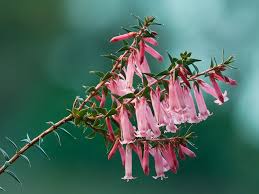
Epacris impressa
Epacris impressa is a species of flowering plant in the family Ericaceae, belonging to the genus Epacris and the subclass Magnoliidae. Its taxonomic classification is: Kingdom: Plantae, Phylum: Streptophyta, Class: Equisetopsida, Order: Ericales, Family: Ericaceae, Genus: Epacris, Species: impressa. Its binomial nomenclature is Epacris impressa Labill.
In the Grampians, Epacris impressa interacts primarily with nectar-feeding birds, such as the Eastern Spinebill, which pollinate it while feeding on its nectar. It also interacts with other plants in its habitat, competing with them for resources, and its regeneration after bushfires is supported by seed and resprouting, indicating interactions with fire ecology.
Epacris impressa, or common heath, has adaptations to thrive in moist, acidic soils and tolerate short dry spells, including a preference for dappled shade and an ability to pioneer disturbed sites. Its adaptations include tolerance to frost and snow, a need for a consistent moisture supply without waterlogging, and a response to hard pruning.
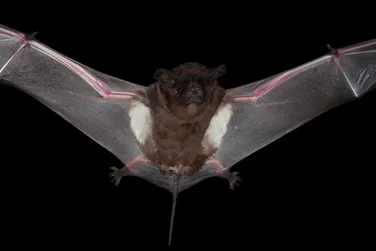
White-striped Freetail Bat
The taxonomy of the White-striped Freetail Bat (Austronomus australis) is: Kingdom: Animalia, Phylum: Chordata, Class: Mammalia, Order: Chiroptera, Family: Molossidae, Genus: Austronomus, and Species: australis. The binomial nomenclature for the White-striped Freetail Bat is Austronomus australis.
In the Grampians, the White-striped Freetail Bat primarily interacts with other organisms by feeding on a wide variety of flying insects, which helps control pest populations. As an insectivore, it competes with other insect-eating bats for food and may share roosting sites with different bat species. It can also be a food source for predators like owls or other carnivorous animals.
White-striped Freetail bats in the Grampians have several adaptations for their environment, including their ability to fly long distances to find food, their preferred roosting habits in tree hollows, and their unique echolocation calls which can be heard by humans.
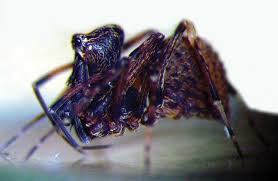
Grampians Assassin Spider
The taxonomy of the Grampians Assassin Spider is: Kingdom: Animalia, Phylum: Arthropoda, Class: Arachnida, Order: Araneae, Family: Archaeidae, Genus: Zephyrarchaea, and Species: marki. Its binomial nomenclature is Zephyrarchaea marki.
The Grampians Assassin Spider is a specialized predator that interacts with other organisms primarily by hunting and preying on other spiders. It plays a critical role in the ecosystem by regulating the populations of other spider species. In return, it is a food source for larger animals like birds, mammals, and reptiles, though specific predators are not yet fully identified.
The Grampians Assassin Spider's adaptations include a unique hunting strategy, specialized body morphology, and reproductive methods. They are nocturnal hunters that get prey using silk lines and strike with extremely long, spear-like jaws to impale spiders from a distance. Their highly modified bodies feature an elongated neck (a cephalothorax extension) and elevated head (A lot of people find them funny because of that), allowing them to attack their prey. The females have a unique maternal